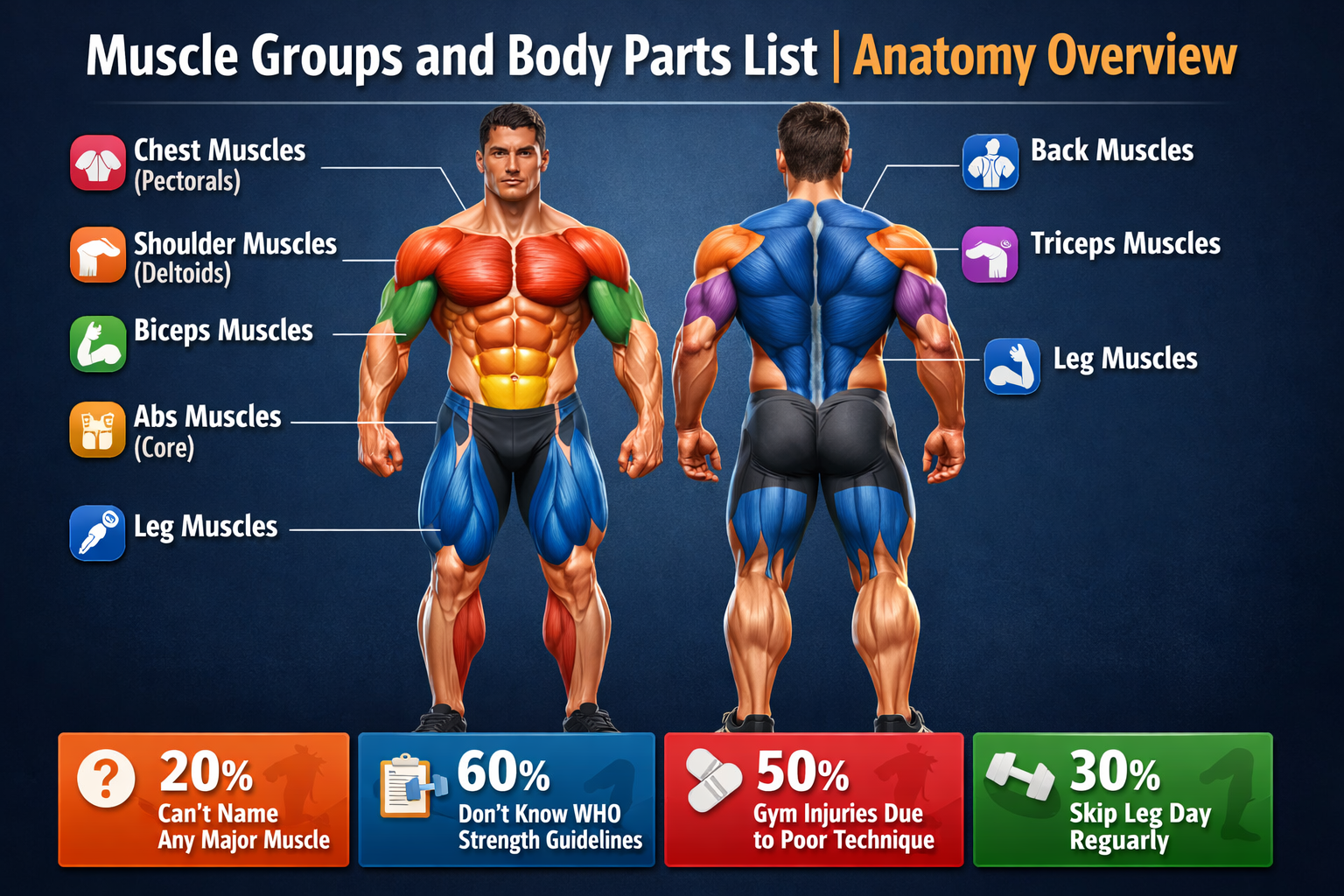
Muscle Groups and Body Parts List | Anatomy Overview
Many people start going to the gym with motivation but without knowledge. Research from fitness trainers and gym surveys shows that nearly 65% of beginners aged 18–30 perform exercises without knowing which muscle group they are targeting. This often leads to poor results, muscle imbalance, and injuries. Understanding major muscle groups helps you train efficiently, safely, and scientifically.

Fitness Awareness: What the Data Says
According to insights from Skulpt (a fitness technology company) and published fitness surveys:
Around 20% of people who exercise regularly cannot name a single major muscle group
About 10–15% of gym-goers cannot correctly identify where their biceps or chest muscles are located
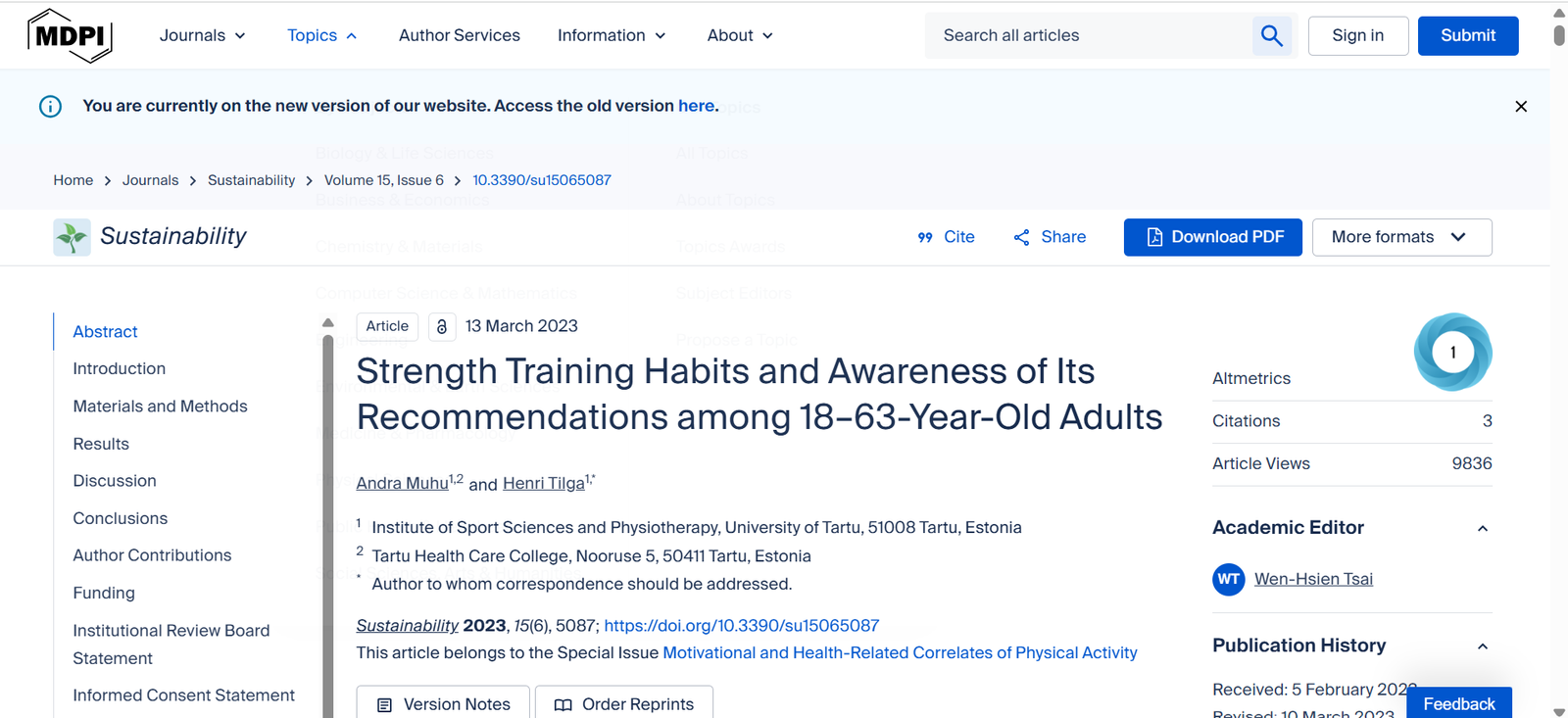
A study published in an MDPI peer-reviewed journal found that over 60% of physically active adults were unaware of basic strength-training guidelines
The World Health Organization (WHO) reports that only a small portion of adults follow proper muscle-strengthening routines, mainly due to lack of knowledge
This shows that many people are working out blindly, lifting weights without knowing what muscle they are training or how it supports the body.
Why Knowing Muscle Groups Matters
Muscle imbalance: Overtraining some muscles while neglecting others causes strength gaps, which can limit performance and create movement issues.
Poor posture: Ignoring stabilizing or opposing muscles (like the upper back or core) can lead to rounded shoulders, lower-back pain, and misalignment.
Slow or no progress: Training without structure often means muscles aren’t worked efficiently or recovered properly, stalling strength and muscle gains.
Higher risk of injury: Weak or undertrained muscles force joints and tendons to absorb extra stress, increasing the chance of strains or overuse injuries.
Early gym dropout: Lack of results, frequent pain, or confusion leads to frustration, causing many people to quit within the first few months.
Major Muscle Groups in the Human Body
| Muscle Group | Main Muscles Included | Primary Function | Common Exercises | Common Beginner Mistakes |
|---|---|---|---|---|
| Chest (Pectorals) | Pectoralis Major & Minor | Pushing movements, arm adduction | Bench Press, Push-ups, Chest Fly | Overtraining chest, ignoring back |
| Back | Latissimus Dorsi, Trapezius, Rhomboids | Pulling movements, posture support | Pull-ups, Rows, Deadlifts | Skipping back workouts |
| Shoulders (Deltoids) | Front, Side, Rear Deltoids | Arm lifting & rotation | Shoulder Press, Lateral Raises | Neglecting rear delts |
| Legs | Quadriceps, Hamstrings, Glutes, Calves | Strength, balance, power | Squats, Lunges, Leg Press | Skipping leg day |
| Biceps | Biceps Brachii | Elbow flexion, pulling assist | Barbell Curl, Dumbbell Curl | Overtraining for size only |
| Triceps | Triceps Brachii | Arm extension, pushing strength | Dips, Pushdowns | Undertraining triceps |
| Abs (Core) | Rectus Abdominis, Obliques | Core stability, balance | Planks, Crunches | Only doing crunches |
The Problem with Modern Gym Culture
Many young gym-goers (especially ages 16–30) often fall into these habits:
Copying influencer workouts:
Social media routines are designed for views, not individual body types or experience levels, leading to ineffective or unsafe training.Training only visible muscles (arms, chest):
Focusing only on “mirror muscles” creates an unbalanced physique and limits overall strength and athletic performance.Ignoring legs, back, and core:
These muscle groups provide stability and power; neglecting them increases injury risk and reduces lifting efficiency.Lifting heavy weight with poor form:
Chasing heavier weights without proper technique shifts stress to joints and ligaments instead of muscles, leading to injuries.
Because of poor exercise selection and limited muscle knowledge, a large portion of beginner injuries occur early, often within the first few months of training—something experienced trainers see repeatedly.
Final Thoughts
Knowing the major muscle groups in the human body is not just for athletes or trainers—it’s essential for everyone who works out. Data from global fitness organizations clearly shows that lack of muscle knowledge is one of the biggest reasons people fail in fitness.