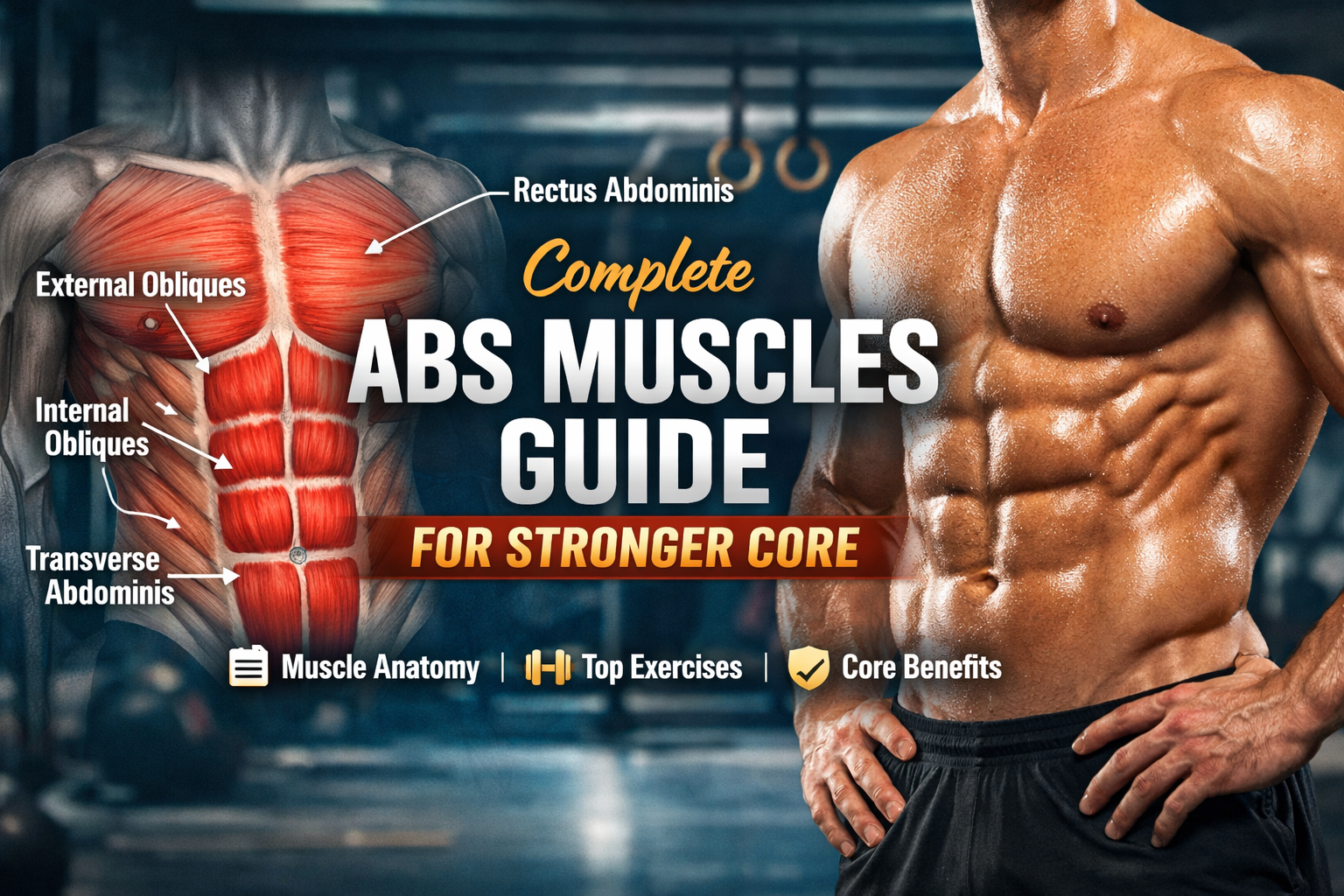
Why Core Strength Matters More Than a Six-Pack (Abs)
When it comes to fitness goals, well-defined abs are often seen as the ultimate symbol of strength and athleticism. However, abdominal muscles are far more than just a visual feature. They play a crucial role in posture, balance, spinal stability, breathing, and movement efficiency. A strong core supports almost every physical activity—from lifting weights and running to sitting upright at a desk.
According to the American Council on Exercise (ACE), the core muscles are involved in nearly every functional movement of the body. Weak abdominal muscles not only limit performance but also increase the risk of injury, particularly lower back pain. This guide explores the types of abdominal muscles, their functions, the benefits of core training, and the most effective workouts to build a strong and resilient core.
Understanding the Structure of Abs (Six Pack) Muscles
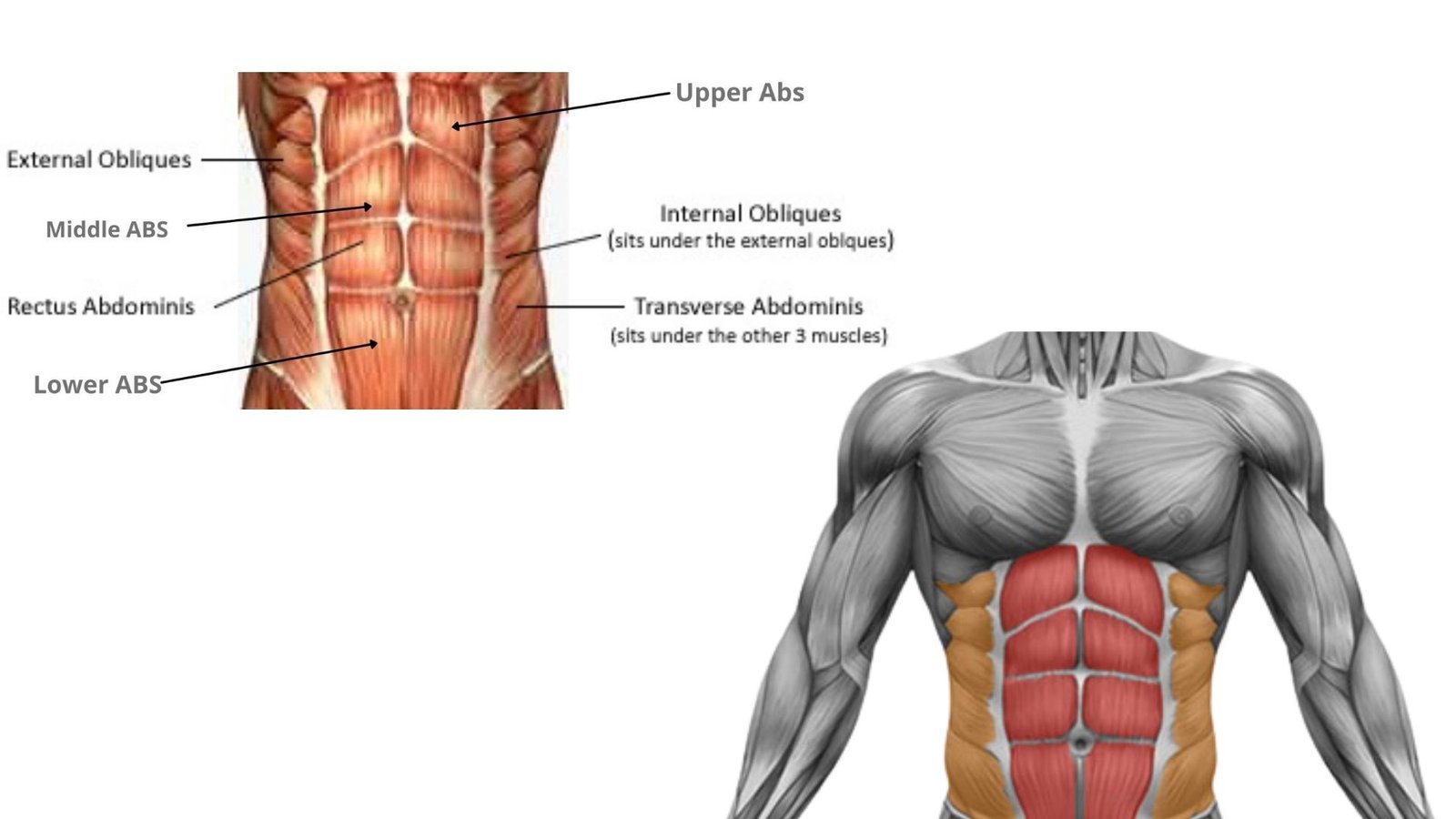
The abdominal region is made up of multiple muscle layers that work together to stabilize the spine, control movement, and maintain posture. Rather than being a single muscle, the abs consist of five key muscle groups.
| Muscle | Location | Primary Function | Common Exercises |
|---|---|---|---|
| Rectus Abdominis | Front of abdomen | Spinal flexion, posture | Crunches, Sit-ups, Cable Crunch |
| External Obliques | Sides of abdomen | Rotation, side bending | Russian Twist, Side Crunch |
| Internal Obliques | Beneath external obliques | Core stabilization | Bicycle Crunch, Side Plank |
| Transversus Abdominis | Deep abdominal layer | Spinal support, bracing | Plank, Dead Bug |
| Pyramidalis | Lower abdomen | Abdominal wall tension | Activated during bracing |
A study published in the Journal of Orthopaedic & Sports Physical Therapy confirms that the transversus abdominis activates before limb movement, making it essential for spinal protection and injury prevention.
Why Abs (Six Pack) Training Is Essential Beyond Aesthetics
- Improved Athletic Performance: A strong core acts as a bridge between the upper and lower body, allowing efficient force transfer. According to the National Strength and Conditioning Association (NSCA), athletes with strong core muscles demonstrate 18–25% higher power output and better movement efficiency. Sports such as football, cricket, swimming, tennis, and running rely heavily on rotational and stabilizing core strength.
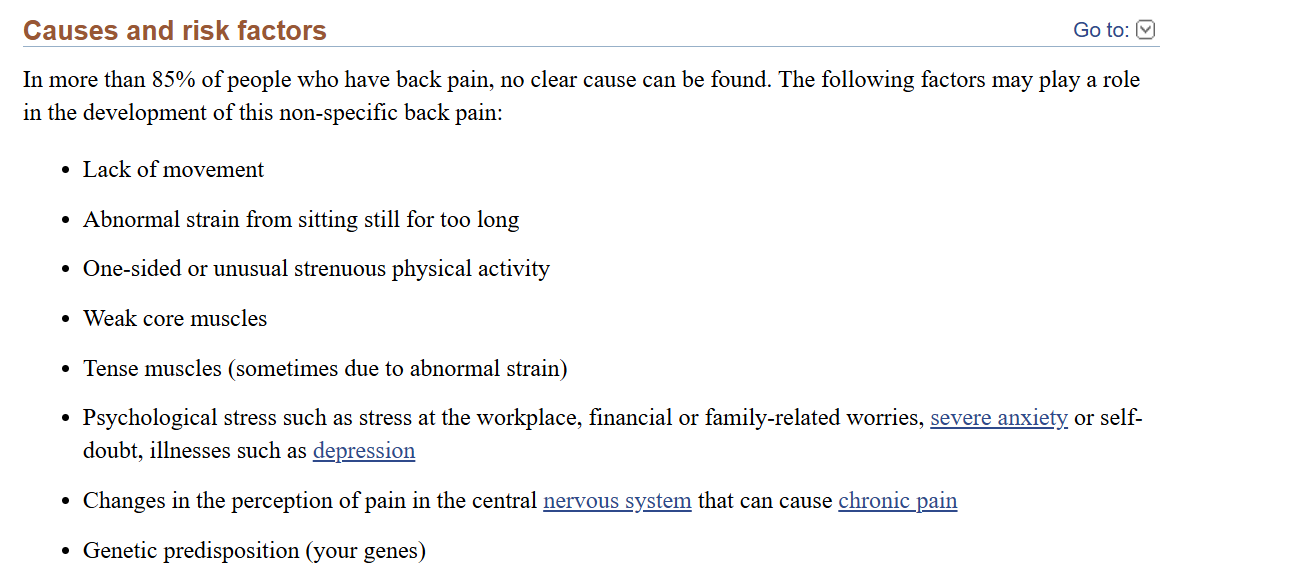
- Lower Back Pain Prevention: The National Institutes of Health (NIH) reports that nearly 80% of adults experience lower back pain at some point in their lives. Weak abdominal muscles place excess stress on the spine. Clinical trials show that core strengthening programs reduce chronic lower back pain by up to 35% by improving spinal alignment and muscular support.
- Improved Posture and Balance: Strong core help maintain a neutral spine and prevent postural issues such as:
Anterior pelvic tilt
Rounded shoulders
Excessive lumbar arch
4. The American Council on Exercise reports that individuals who follow structured core training programs improve postural endurance by 30–40% within 8 weeks.
- Waistline Control and Fat Loss Support:
- While spot fat reduction is a myth, resistance-based ab training:
Increases muscle density
Enhances metabolic rate
Improves abdominal definition
When combined with a calorie-controlled diet and full-body workouts, core training contributes to a leaner waistline and improved body composition.
Types of Abs (6 Pack) Workouts and Best Exercises
We have divided the workout into different sections to make it easier to understand and follow. This structured abs workout guide highlights the most effective variations to strengthen, define, and stabilize your core muscles.
| Target Area | Level | Exercises | Key Focus |
|---|---|---|---|
| Upper Abs Workout | Beginner | Basic Crunch, Pulse Crunch, Toe Touch Crunch, Butterfly Crunch (feet together), Reach-Up Crunch | Controlled contraction & upper spinal flexion |
| Intermediate | Cross-Arm Crunch, Arms-Overhead Crunch, Wide-Leg Crunch, Heel Tap Crunch, Partial Sit-Ups, Crunch Hold (Isometric) | Controlled contraction & upper spinal flexion | |
| Advanced | Crunch + Knee Raise, Cable Crunch (gym), Decline Bench Crunch (gym), Medicine Ball Crunch | Controlled contraction & upper spinal flexion | |
| Middle Abs Workout | Beginner | Straight Crunch, Crunch Pulses, Sit-Up + Mid-Range Hold | Core engagement & constant tension |
| Intermediate | Stability Ball Crunch, V-Crunch, Dead Bug Crunch | Core engagement & constant tension | |
| Advanced | Plank Up-Downs, Plank Shoulder Taps, Hollow Body Hold | Core engagement & constant tension | |
| Lower Abs Workout | Beginner | Lying Leg Raises, Bent-Knee Leg Raises, Reverse Crunch, Reverse Crunch Pulses, Flutter Kicks, Scissor Kicks | Pelvic tilt & lower-core control |
| Intermediate | Toe Touch Leg Raises, L-Sit (floor), Dead Bug (leg focus), Slow Mountain Climbers, Hanging Knee Raises, Bicycle Crunch (slow), Jackknife Sit-Ups, Plank Knee-to-Chest | Pelvic tilt & lower-core control | |
| Advanced | Hanging Leg Raises, Captain’s Chair Knee Raises, Frog Crunch, Windshield Wipers, Seated Leg Tucks | Pelvic tilt & lower-core control | |
| Obliques/Side Abs Workout | Beginner | Russian Twists (feet down), Side Crunch, Standing Side Bends | Rotation & lateral stability |
| Intermediate | Side Plank Hip Dips, Side Plank Reach-Through, Cross-Body Mountain Climbers, Oblique V-Crunch, Seated Twist Hold, Plank Twists (Hip Dips) | Rotation & lateral stability | |
| Advanced | Woodchoppers (Cable/Band), Standing Cable Rotations, Hanging Knee Raises with Twist, Hanging Leg Raises with Twist, Medicine Ball Rotational Throws, Suitcase Carries, Turkish Get-Up | Rotation & lateral stability | |
| Deep Core | Beginner | Plank, Forearm Plank with Breathing, Dead Bug, Bird Dog, Glute Bridge Hold, Quadruped Knee Lifts | Breathing, bracing & spinal stability |
| Intermediate | Bear Crawl Hold, Bear Crawls, Side Plank, Side Plank with Leg Lift, Marching Glute Bridge, Stability Ball Dead Bug | Breathing, bracing & spinal stability | |
| Advanced | Pallof Press, Standing Cable Hold (Anti-Rotation), Stability Ball Plank, Farmer’s Carry, Single-Leg Balance Hold, Seated Anti-Rotation Hold | Breathing, bracing & spinal stability |
How To Train or Build Core Strength
| Level | Day | Focus | Example Exercises |
|---|---|---|---|
| Beginner | Monday | Upper & Middle Abs | Basic Crunch, Pulse Crunch, Toe Touch Crunch, Straight Crunch, Sit-Up + Mid-Range Hold |
| Wednesday | Obliques & Stability | Side Crunch, Standing Side Bends, Bird Dog, Plank, Dead Bug | |
| Friday | Lower Abs & Endurance | Lying Leg Raises, Bent-Knee Leg Raises, Reverse Crunch, Flutter Kicks, Scissor Kicks | |
| Intermediate | Monday | Upper & Middle Abs | Cross-Arm Crunch, Arms-Overhead Crunch, Wide-Leg Crunch, Stability Ball Crunch, V-Crunch |
| Wednesday | Obliques & Stability | Side Plank Hip Dips, Side Plank Reach-Through, Cross-Body Mountain Climbers, Oblique V-Crunch, Plank Shoulder Taps | |
| Friday | Lower Abs & Endurance | Toe Touch Leg Raises, L-Sit (floor), Dead Bug (leg focus), Slow Mountain Climbers, Hanging Knee Raises | |
| Advanced | Monday | Upper & Middle Abs | Crunch + Knee Raise, Cable Crunch, Decline Bench Crunch, Medicine Ball Crunch, Hollow Body Hold |
| Wednesday | Obliques & Stability | Woodchoppers (Cable/Band), Hanging Knee Raises with Twist, Turkish Get-Up, Medicine Ball Rotational Throws, Pallof Press | |
| Friday | Lower Abs & Endurance | Hanging Leg Raises, Captain’s Chair Knee Raises, Frog Crunch, Windshield Wipers, Jackknife Sit-Ups, Plank Knee-to-Chest |
Training your core effectively doesn’t mean doing endless crunches every day. To truly focus on building core strength, it’s essential to target the lower, mid, and upper core while allowing proper recovery between sessions. A balanced plan that includes core strength training exercises 2–4 times per week helps improve stability, endurance, and functional power without overtraining. If you’re wondering how to improve core strength, the key is progressive overload, proper form, and variety in your exercises. That’s why we’ve aligned the routines into beginner, intermediate, and advanced levels—so you can follow the best workout for core strength based on your fitness stage while protecting your waist aesthetics and preventing back pain.
Nutrition and Recovery for Visible 6 Pack
Core are built in the gym but revealed in the kitchen. Even the strongest core muscles won’t be visible without proper nutrition.
Key Nutrition Tips:
- Maintain a slight calorie deficit
- Consume adequate protein (1.6–2.2 g/kg body weight)
- Limit processed sugars and alcohol
- Stay hydrated
Sleep and stress management also play vital roles, as elevated cortisol levels can increase abdominal fat storage.
Final Thoughts: Building Core for Life
Strong core are not just about a six-pack—they are the foundation of functional movement, injury prevention, and overall fitness. By understanding the anatomy of the core and following a structured training approach, you can build abs that enhance both performance and quality of life.
Focus on proper form, progressive overload, balanced training, and nutrition. Over time, consistent effort will lead to a stronger, more stable core—and the aesthetic results will follow naturally.
People Also Ask
1.Can we train abs daily?
Training abs every day isn’t necessary and may lead to overuse injuries. For better core strength, aim for 2–4 focused sessions per week, with proper recovery to allow muscles to rebuild and grow stronger.
2. Should you train abs while bulking?
Yes, training abs during a bulk helps maintain posture, spinal support, and muscle balance. Strong abs enhance overall core strength fitness without interfering with muscle gain when programmed correctly.
3. Does training abs make your waist thicker?
No, ab training alone doesn’t significantly widen your waist. Unless combined with overall fat gain or excessive heavy oblique loading, it mainly improves tone and highlights the benefits of core strength.
4. How to train abs with low back pain?
Choose stability-focused movements like planks, dead bugs, and bird dogs. These are among the best exercises for core strength and stability, as they protect the spine while building support muscles.
5. When is the best time to train your abs?
You can train abs anytime—after compound lifts, post-cardio, or on separate days. Consistency matters more than timing for improving core strength fitness.
6. Why is core strength so important?
Understanding why core strength is so important comes down to posture, injury prevention, balance, and power transfer. A strong core supports nearly every movement, from lifting weights to daily activities.
7. What are the benefits of core strength for beginners?
The main benefits of core strength include better balance, reduced risk of back pain, improved athletic performance, and stronger overall movement control, even at a beginner level.
8. What are the best exercises for core strength and stability?
The best exercises for core strength and stability include planks, hanging leg raises, cable crunches, ab rollouts, and Pallof presses, as they target deep stabilizing muscles along with visible abs.
9. How long does it take to build visible abs?
Visible abs depend more on body fat percentage than training volume. Combine proper nutrition with consistent workouts to maximize the benefits of core strength and definition.
10. How often should beginners train their core?
Beginners should start with 2–3 sessions weekly using controlled movements. Gradual progression improves core strength fitness safely while minimizing strain or injury.

Swaraj Verma
Swaraj Verma is a certified health and fitness trainer with over 10 years of experience in the fitness and wellness industry and the founder of Fitswaraj.com, a health-focused platform dedicated to promoting sustainable, science-based lifestyles. He holds Bachelor’s and Master’s degrees in Nutrition and Health Sciences and specializes in exercise science, nutrition planning, body transformation, and lifestyle coaching. Over the years, he has successfully trained 50+ fitness models and individuals using personalized, evidence-based methods. Through Fitswaraj, Swaraj focuses on long-term wellness over short-term fitness trends by delivering reliable, expert-driven health content and offering a verified fitness professional listing that helps users connect with trusted trainers and wellness experts.