Why Back Strength Matters More Than Just a V-Taper

When people think about back training, they often focus on aesthetics — especially achieving a wide V-taper. However, strong back muscles are about far more than appearance. They support posture, stabilize the spine, enhance pulling strength, and significantly reduce injury risk.
According to the American Council on Exercise, strengthening posterior-chain muscles improves movement efficiency and lowers the likelihood of injury. In today’s desk-bound lifestyle, weak back muscles are a major contributor to chronic pain. Prolonged sitting, poor posture, and limited mobility gradually weaken spinal support structures. Back strength is not optional — it is foundational for overall health and performance.
Understanding Back Muscle Anatomy (Complete Breakdown)
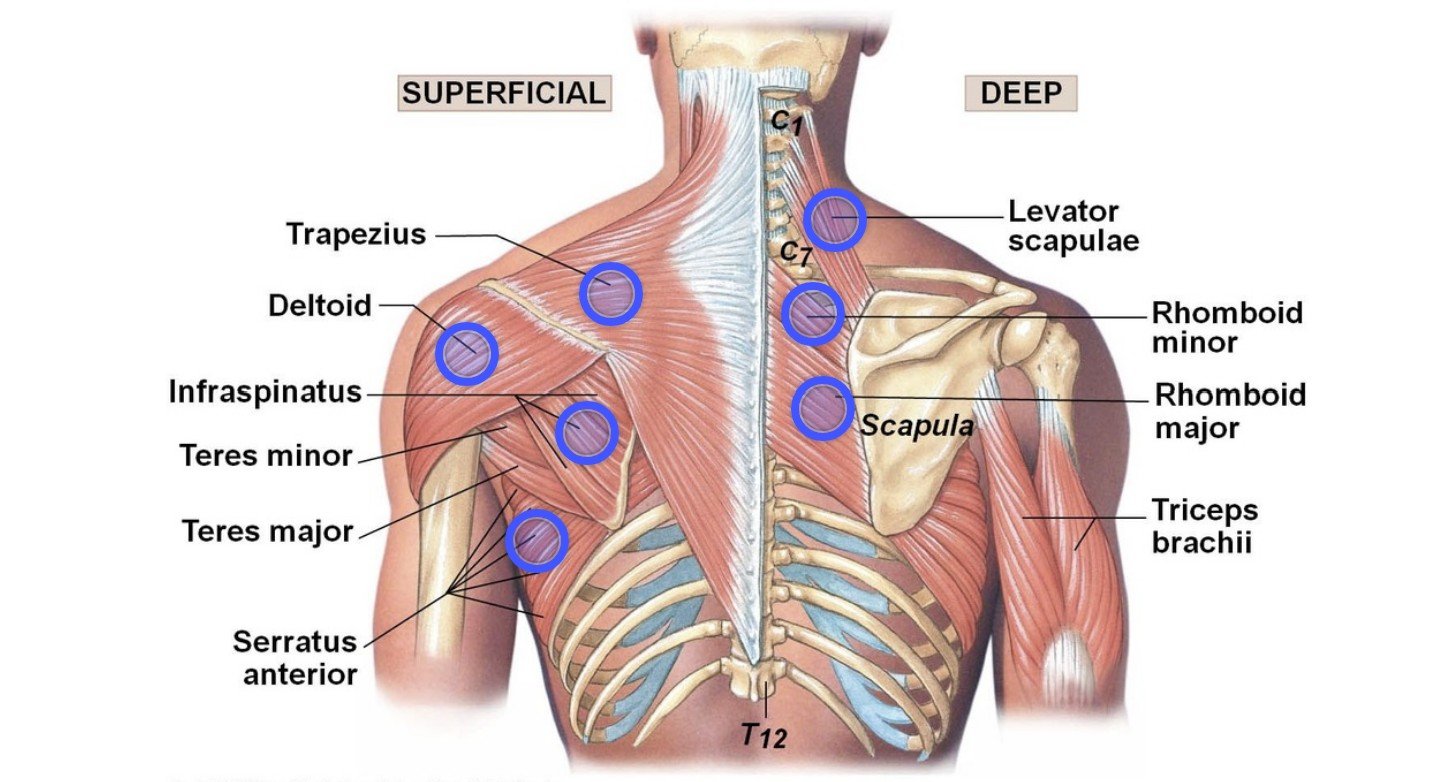
To train effectively, you must understand the anatomy of the back muscles, the different types of back muscles, and how each part contributes to movement and stability. The back consists of superficial (visible) muscles and deep stabilizing muscles. Ignoring deep stabilizers while focusing only on visible muscles can create imbalance and increase injury risk.
Superficial Back Muscles (Visible Muscles)
Muscle Name | Location | Primary Function | Training Role |
Trapezius | Upper & middle back | Shoulder elevation, retraction, posture control | Improves upper back thickness and posture stability |
Latissimus Dorsi | Mid to lower back | Arm pulling and shoulder extension | Creates V-shape width and enhances pulling strength |
Rhomboids | Between shoulder blades | Scapular retraction and stabilization | Supports strong rows and better posture alignment |
Teres Major | Upper outer back | Assists arm extension and internal rotation | Enhances pulling movements and upper back coordination |
These muscles are heavily activated during upper and middle back exercises such as pull-ups, rows, and lat pulldowns.
Deep Back Muscles (Spinal Stability)
Muscle Name | Location | Primary Function | Stability Role |
Erector Spinae | Along the spine | Spinal extension and posture maintenance | Supports lifting movements and prevents spinal collapse |
Multifidus | Deep spinal layer | Segmental spinal stabilization | Activates before movement to protect vertebrae |
Quadratus Lumborum | Lower back | Lateral flexion and pelvic stability | Maintains core balance and lower back support |
Research published in the Journal of Orthopaedic & Sports Physical Therapy highlights that deep spinal muscles activate before movement to protect the spine. Strong lower back muscles are essential for injury prevention and safe lower back workouts.
Back Pain in Modern Lifestyle

According to the National Institutes of Health, nearly 80% of adults experience back pain at some point in life. Sitting for long hours, weak posterior chain muscles, and limited mobility reduce activation of all back muscles, leading to instability and discomfort. Incorporating proper back-strengthening exercises and mobility drills is critical for long-term spinal health.
Types of Back Workouts (Beginner to Advanced)
Below is a structured table covering all major back exercises, categorized by target area, level, and training focus.
Target Area | Level | Exercises | Key Focus |
|---|---|---|---|
Upper Back Workout | Beginner | Assisted Pull-Ups, Resistance Band Rows, Machine Lat Pulldown | Controlled pulling mechanics & proper activation |
Intermediate | Pull-Ups, Chin-Ups, Front Lat Pulldown, Close Cable Pulldown | Lat width development & strength building | |
Advanced | Weighted Pull-Ups, T-Bar Row, Back Shrugs | Upper back density & overload progression | |
Middle Back Workout | Beginner | Seated Cable Row, Resistance Band Rows | Scapular control & posture improvement |
Intermediate | Bent-Over Barbell Row, Face Pull, Reverse Fly | Mid-back thickness & rear delt stability | |
Advanced | Single-Arm Dumbbell Row, Inverted Row, Renegade Row | Unilateral strength & structural balance | |
Lower Back Workout | Beginner | Bird Dog, Cat-Cow Stretch, Superman Hold | Spinal stability & mobility control |
Intermediate | Hyperextensions, Good Mornings | Lower back endurance & posterior chain activation | |
Advanced | Romanian Deadlifts, Dumbbell Deadlift | Posterior chain strength & hip hinge mastery |
How Long Does Back Muscle Recovery Take?
Muscle recovery depends on training intensity, volume, nutrition, and sleep.
- Moderate training sessions typically require 48 hours for recovery.
- Heavy compound sessions like deadlifts may require 72 hours.
- Beginners may experience longer soreness due to adaptation.
- Advanced lifters recover faster due to training adaptation.
- Adequate sleep (7–9 hours) accelerates muscle repair.
Training the back 2 times per week is optimal for most individuals aiming for muscle growth.
Nutrition for Back Muscle Growth & Recovery
If your goal is a back workout for muscle growth or lean muscle development, nutrition plays a crucial role.
- 1.6–2.2 g protein per kg bodyweight supports muscle repair and growth.
- Adequate carbohydrates replenish glycogen and improve training performance.
- Healthy fats support hormonal balance and recovery processes.
- Proper hydration maintains muscle function and reduces fatigue.
- Post-workout meals within 60 minutes enhance recovery efficiency.
Without nutritional support, even the best back muscle workouts will not maximize results.
Common Back Training Mistakes
- Ignoring lower back muscles reduces spinal support and increases injury risk.
- Training only lats creates imbalance and weak middle back development.
- Poor lifting form increases strain on joints and connective tissue.
- Skipping warm-ups reduces mobility and activation.
- Overtraining delays recovery and limits muscle growth.
- To truly strengthen back muscles, train upper, middle, and lower regions with proper technique and controlled execution.
Final Thoughts: Strong Back = Strong Body
Back training is not just about appearance; it is about resilience, durability, and total-body strength. Whether your goal is building back muscle, improving posture, preventing pain, or increasing athletic performance, structured training that targets all regions of the back creates a powerful foundation. A strong back supports every lift, every movement, and every step you take. Strong back, strong spine, strong body.


Swaraj Verma
Swaraj Verma is a certified health and fitness trainer with over 10 years of experience in the fitness and wellness industry and the founder of Fitswaraj.com, a health-focused platform dedicated to promoting sustainable, science-based lifestyles. He holds Bachelor’s and Master’s degrees in Nutrition and Health Sciences and specializes in exercise science, nutrition planning, body transformation, and lifestyle coaching. Over the years, he has successfully trained 50+ fitness models and individuals using personalized, evidence-based methods. Through Fitswaraj, Swaraj focuses on long-term wellness over short-term fitness trends by delivering reliable, expert-driven health content and offering a verified fitness professional listing that helps users connect with trusted trainers and wellness experts.