Biceps Training: Why Functional Strength Matters More Than Muscle Size
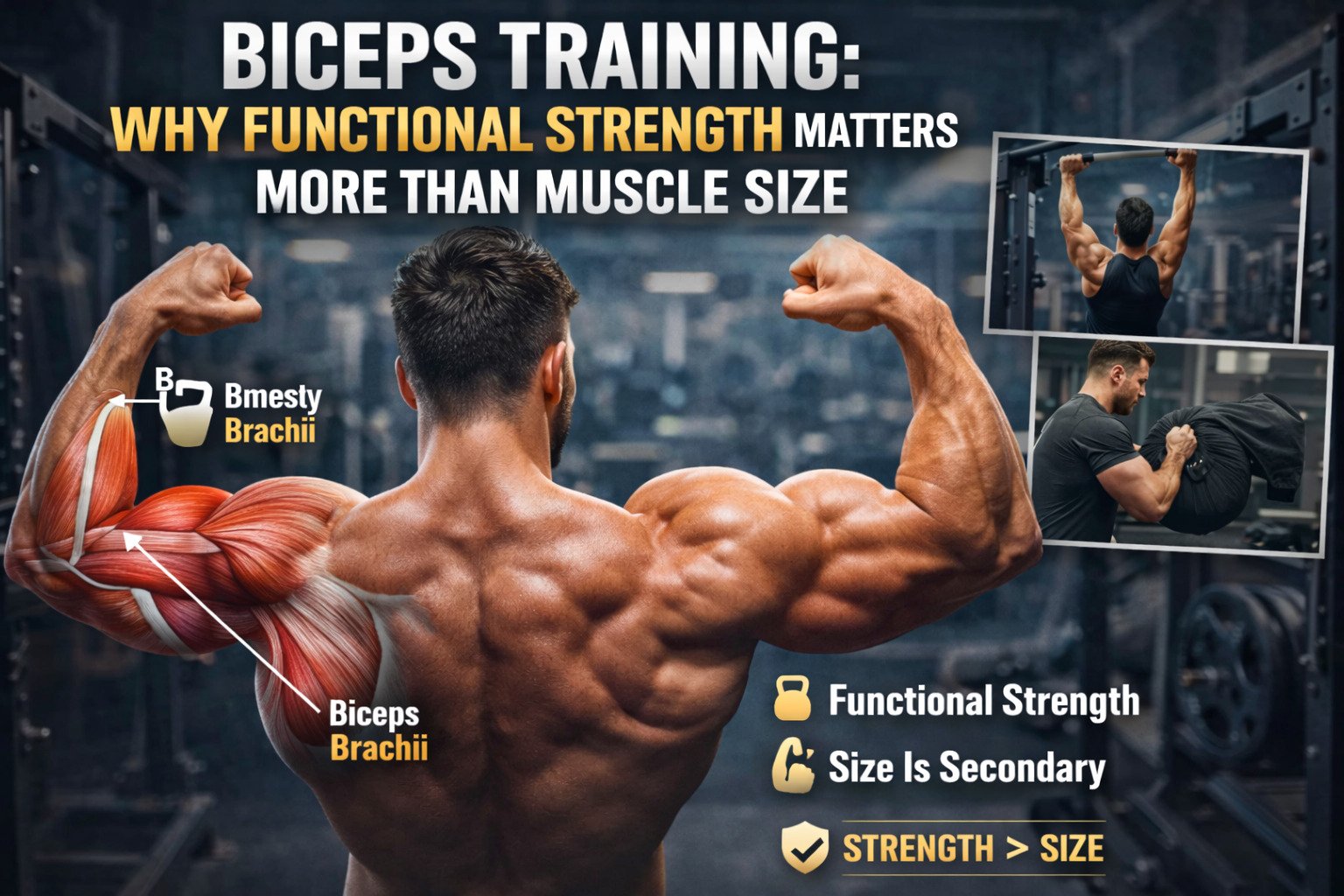
When most people think about training their arms or biceps muscle, their primary goal is often to increase biceps size. While muscular development certainly enhances physical appearance, the actual value of biceps training lies in functional strength, joint stability, and overall upper-body performance.
The biceps are not just “show muscles.” They play a vital role in pulling movements, grip control, elbow flexion, and shoulder stabilization. Whether you are lifting everyday objects, carrying weight, performing rowing movements, climbing, playing cricket, or engaging in resistance training, strong biceps significantly improve efficiency and reduce injury risk.
Focusing only on arm size without building real strength can create muscular imbalance and limit performance. Structured biceps training, supported by proper recovery and progression, leads to more potent, more stable, and more resilient upper limbs.
Understanding Biceps Muscle Anatomy

To train effectively, you must understand the anatomy of the biceps muscles, the different muscle components involved, and how each part contributes to strength, stability, and arm development. The biceps region consists of the primary biceps brachii muscle along with supporting muscles that enhance thickness, grip strength, and overall arm performance. Ignoring supporting muscles while focusing only on visible size can lead to muscular imbalance and limited strength gains.
Biceps Muscles (Primary & Supporting Muscles)
Muscle Name | Location | Primary Function | Training Role |
Biceps Brachii – Long Head | Outer front upper arm | Elbow flexion, forearm supination, shoulder stabilization | Creates bicep peak and enhances outer-arm development |
Biceps Brachii – Short Head | Inner front upper arm | Elbow flexion and arm stabilization | Builds arm width and inner-arm thickness |
Brachialis | Beneath the biceps brachii | Strong elbow flexion | Adds overall arm mass and pushes biceps outward for fuller appearance |
Brachioradialis | Upper forearm | Assists elbow flexion and grip strength | Improves grip stability and forearm size |
These muscles work together during curling, pulling, and gripping movements such as chin-ups, rows, and resistance curls. A structured training program should target both the visible biceps heads and the deeper supporting muscles to ensure balanced development, improved strength, and reduced injury risk.
Targeting Different Areas of the Biceps
Muscle Focus | Position | Effective Exercises | Training Goal |
Long Head | Outer arm | Incline curls, Close-grip barbell curls | Peak development |
Short Head | Inner arm | Preacher curls, Concentration curls | Arm width |
Brachioradialis | Forearm | Hammer curls, Reverse curls | Grip strength |
Complete Biceps Exercises (Compound & Isolation)
Exercise | Equipment | Target Area | Level | Focus |
Barbell Curl | Barbell | Overall biceps | Beginner–Advanced | Mass & strength |
EZ Bar Curl | EZ Bar | Entire group | Intermediate | Wrist comfort |
Alternating Dumbbell Curl | Dumbbells | Long & Short head | Beginner | Symmetry |
Incline Dumbbell Curl | Dumbbells + Bench | Long head | Intermediate | Stretch & peak |
Hammer Curl | Dumbbells | Brachioradialis | Beginner | Forearm strength |
Preacher Curl | Barbell/Dumbbell | Short head | Intermediate | Isolation |
Cable Curl | Cable Machine | Full tension | All levels | Constant resistance |
Concentration Curl | Dumbbell | Short head | Beginner | Strict contraction |
Reverse Curl | Barbell/Dumbbell | Forearms | Intermediate | Grip power |
Chin-Ups | Bodyweight | Compound biceps | Advanced | Functional strength |
Compound movements build overall strength, while isolation exercises refine muscle development and shape.
Benefits of Structured Biceps Training
Structured biceps training goes beyond building arm size — it enhances upper-body strength, joint stability, and movement efficiency. When exercises are properly programmed with balanced volume, controlled technique, and progressive overload, biceps training can improve athletic performance, prevent injuries, and enhance overall muscular coordination.
- Improves Pulling Strength: Strong biceps significantly enhance performance in pulling movements like rows, pull-ups, and deadlifts. They assist the back muscles during elbow flexion, allowing you to lift heavier loads with better control.
- Enhances Grip Stability: Training the biceps alongside the brachioradialis improves forearm activation and grip endurance. A firmer grip supports better control in compound lifts and daily lifting tasks.
- Supports Shoulder Joint Health: The biceps help stabilize the shoulder, especially during overhead and pulling movements. Proper strength development helps maintain alignment and reduces excessive stress on the shoulder joint.
- Reduces Elbow Strain: Balanced arm training strengthens the muscles surrounding the elbow joint.
- This reduces overuse stress and lowers the risk of tendon irritation or discomfort.
- Promotes Muscular Balance: Structured programming ensures that both heads of the biceps and the supporting muscles are trained evenly.
- Balanced development prevents strength discrepancies that can affect performance and posture.
- Improves Posture and Upper-Body Symmetry: Strong, well-developed arms support better control of upper-body movements.
- When combined with back training, they contribute to improved posture and a more symmetrical physique.
Common Biceps Training Mistakes
Many individuals struggle to see results from biceps training, not because of a lack of effort, but due to poor execution and programming errors. Avoiding common mistakes ensures better muscle activation, safer training, and long-term strength development.
- Using Excessive Momentum: Swinging the body or using shoulder movement reduces direct tension on the biceps. This limits muscle activation and increases stress on the lower back and joints.
- Lifting Weights Beyond Control Capacity: Choosing weights that are too heavy often compromises form and range of motion. Poor control reduces effectiveness and raises the risk of elbow or shoulder strain.
- Ignoring Forearm and Brachialis Development: Focusing only on the visible biceps heads can create an imbalance in arm strength. Neglecting supporting muscles limits grip strength and overall arm thickness.
- Training Arms Without Adequate Recovery: Muscles grow during recovery, not during the workout itself. Insufficient rest can lead to fatigue accumulation and stalled progress.
- Focusing Only on Isolation Exercises: Relying solely on curls ignores the benefits of compound pulling movements. A balanced program should combine isolation and compound exercises for complete development.

Recovery & Nutrition Guidelines
Effective biceps development does not depend only on training intensity — it relies heavily on proper recovery and nutritional support. Muscles respond to resistance training by repairing and rebuilding themselves during rest periods. Without adequate recovery and dietary support, progress slows and injury risk increases.
Ensure Adequate Daily Protein Intake
- Protein provides the essential amino acids required for muscle repair and growth.
- Consistent intake throughout the day supports optimal recovery and strength adaptation.
Allow 48–72 Hours of Recovery Between Arm Sessions
- Biceps muscles require sufficient time to repair after resistance training.
- Properly spacing sessions prevents overuse and promotes more vigorous subsequent workouts.
Sleep 7–9 Hours Per Night
- Quality sleep supports muscle repair, hormone regulation, and overall recovery.
- Insufficient sleep can reduce performance, slow growth, and increase fatigue.
Gradually Increase Weight, Reps, or Training Volume
- Progressive overload stimulates continuous muscle adaptation and strength improvement.
- Small, consistent increases are more effective and sustainable than sudden heavy jumps.
Muscle growth occurs during recovery — not during the workout itself. Training provides the stimulus; recovery creates the results.
Final Thoughts
Biceps training should not be reduced to chasing arm size alone. True development involves strength, stability, balance, and controlled progression. By understanding anatomy, applying structured programming, and prioritizing recovery, you build arms that are powerful, resilient, and functional — not just visually impressive.

Swaraj Verma
Swaraj Verma is a certified health and fitness trainer with over 10 years of experience in the fitness and wellness industry and the founder of Fitswaraj.com, a health-focused platform dedicated to promoting sustainable, science-based lifestyles. He holds Bachelor’s and Master’s degrees in Nutrition and Health Sciences and specializes in exercise science, nutrition planning, body transformation, and lifestyle coaching. Over the years, he has successfully trained 50+ fitness models and individuals using personalized, evidence-based methods. Through Fitswaraj, Swaraj focuses on long-term wellness over short-term fitness trends by delivering reliable, expert-driven health content and offering a verified fitness professional listing that helps users connect with trusted trainers and wellness experts.