Chest Muscles Guide: Build Strength & Size Effectively
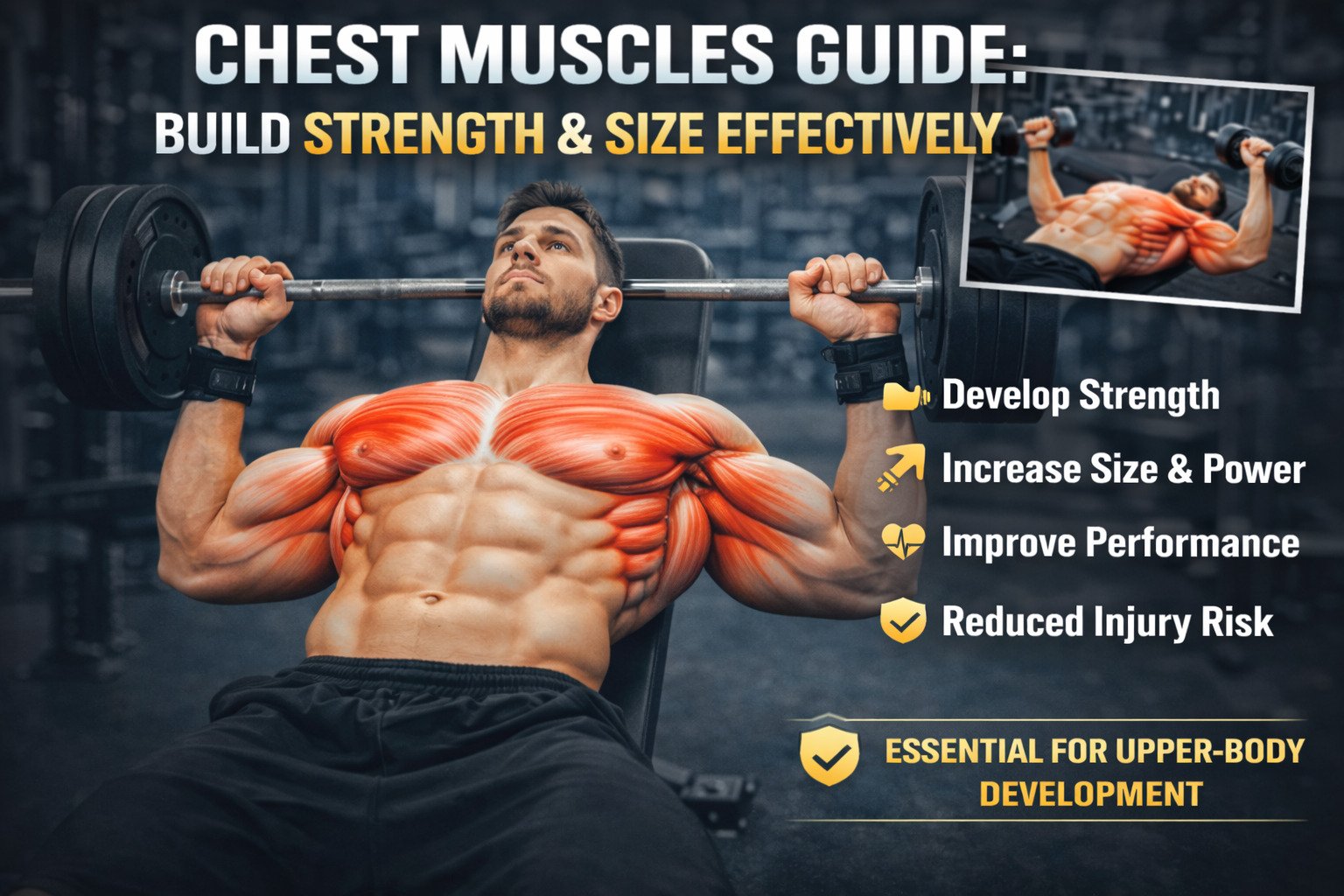
Building strong chest muscles is fundamental to increasing upper body strength and developing a well-balanced physique. A properly trained chest not only enhances physical appearance but also supports powerful pushing movements, shoulder stability, and overall athletic performance. Rather than relying solely on heavy bench presses, effective chest development requires understanding how different regions of the chest function and applying structured training methods. By targeting the upper, middle, and lower chest with correct exercise selection and progressive overload, you can achieve balanced muscle growth. Consistency, proper technique, and adequate recovery are the keys to building strength and size effectively.
Types of Chest Muscles: Understanding Chest Anatomy
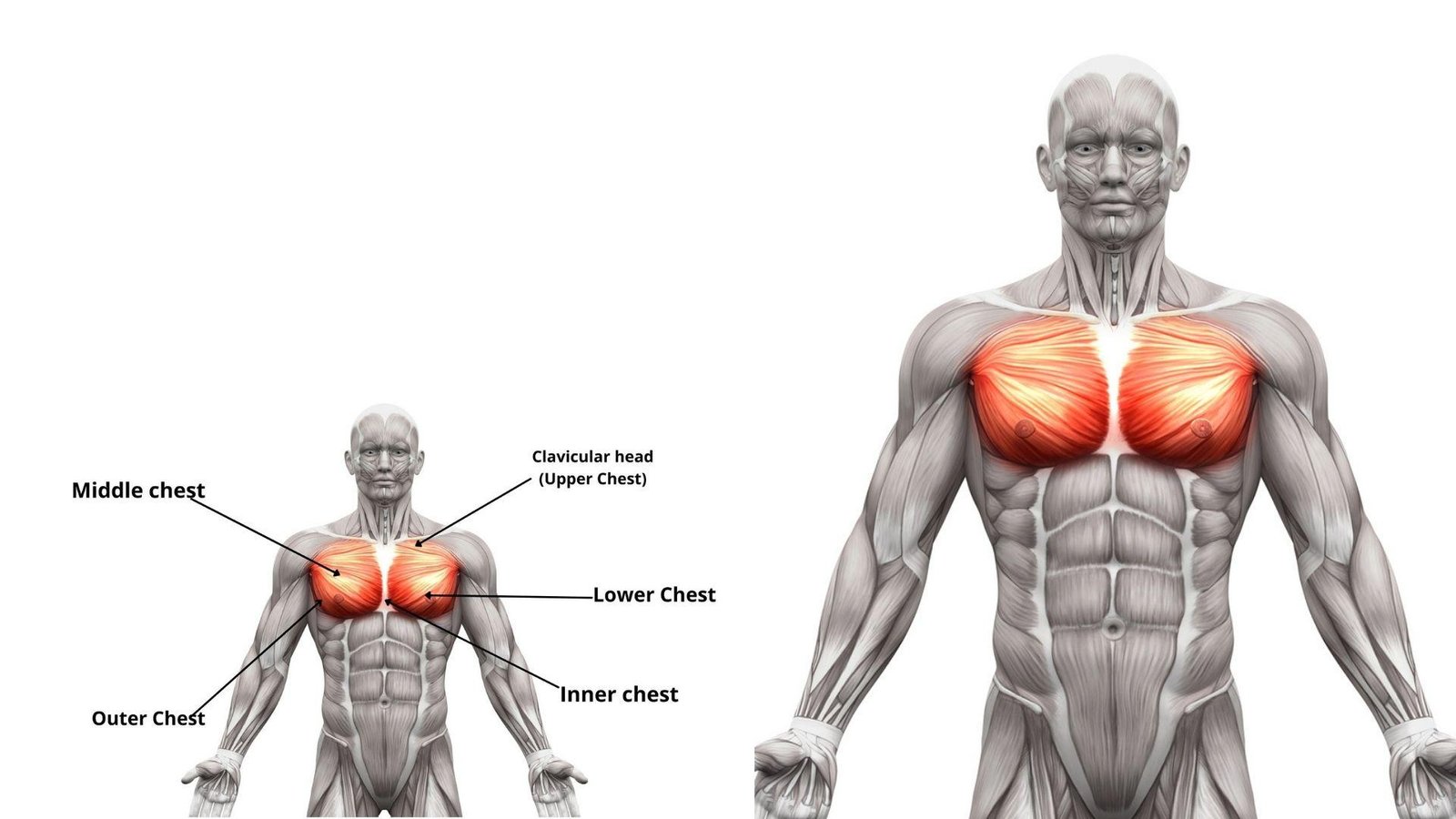
The chest region is composed of multiple muscle layers that work together to produce pushing power, stabilize the shoulders, and support upper-body posture. Rather than functioning as a single muscle, the chest consists of three key muscle groups that contribute to strength, stability, and movement efficiency.
Muscle | Location | Primary Function | Common Exercises |
Pectoralis Major | Front of chest (clavicle to sternum) | Horizontal adduction, shoulder flexion, internal rotation | Bench Press, Push-Ups, Chest Press, Dips |
Pectoralis Minor | Beneath pectoralis major | Scapular stabilization, assists shoulder movement | Incline Push-Ups, Scapular Push-Ups, Dips |
Serratus Anterior | Side of rib cage | Scapular protraction, shoulder stabilization | Push-Ups Plus, Plank Variations, Dumbbell Punches |
Benefits of Chest Muscle Exercises
Training chest muscles offers far more than visual improvement. A well-developed chest contributes to strength, stability, posture, and overall athletic performance. Since the chest muscles play a central role in pushing movements and shoulder mechanics, strengthening them enhances both functional capacity and muscular balance. When trained correctly and consistently, chest exercises support upper body power, reduce injury risk, and improve physical symmetry. Below are the top five key benefits of incorporating chest muscle training into your workout routine:
Top 5 Benefits:
- Increased Upper Body Strength – Enhances pushing power for exercises like bench press, push-ups, dips, and overhead movements.
- Improved Athletic Performance – Supports explosive movements such as throwing, sprint arm drive, combat strikes, and swimming strokes.
- Better Posture & Shoulder Stability – Strengthens muscles that assist in maintaining proper shoulder alignment and upper body posture.
- Enhanced Muscle Symmetry & Physique – Creates a broader chest appearance and improves upper body proportions.
- Reduced Injury Risk – Improves shoulder joint stability and muscular balance, lowering the chances of strain during heavy lifting or sports activities.
How To Build Chest Muscles
If you want to show your muscles in shape, then you have to increase them in size. Along with this, you also have to decrease your body fat so that your muscles will be able to see the shape. If the perfect pecs are your goal, you must work on your chest muscles.
Muscles are made up of proteins. It is the building block of muscles- so the more you ingest (to an extent), the ability will be greater to build the muscle which is called muscle protein synthesis. Eating a rich diet of whole grains, fruits, vegetables, and a variety of protein sources is the general recommendation to reduce body fat.
You can tip the scale to muscle protein synthesis when you consume a greater amount of protein. It helps muscles to grow bigger. The recent American Dietetic Association recommendation for most individuals is .8 grams per kilogram (kg) of body weight.

Structured Chest Workout Plan (Beginner to Advanced)
Target Area | Level | Exercises | Key Focus |
Upper Chest | Beginner | Incline Push-Ups, Light Incline Dumbbell Press, Resistance Band Incline Press | Controlled contraction & upper chest activation |
Intermediate | Incline Barbell Press, Incline Dumbbell Press, Low-to-High Cable Fly, Incline Machine Press | Upper chest hypertrophy & clavicular head focus | |
Advanced | Heavy Incline Barbell Press, Incline Smith Machine Press, Incline Dumbbell Press (slow tempo), Cable Incline Press (drop sets) | Maximum upper chest overload & strength | |
Middle Chest | Beginner | Standard Push-Ups, Flat Dumbbell Press (light), Machine Chest Press | Basic horizontal pressing & activation |
Intermediate | Barbell Bench Press, Flat Dumbbell Press, Pec Deck Machine, Chest Press Machine | Mass building & controlled adduction | |
Advanced | Heavy Bench Press, Paused Bench Press, Dumbbell Press (tempo control), Plate Press | Maximum chest thickness & power | |
Lower Chest | Beginner | Decline Push-Ups, Assisted Chest Dips, Resistance Band High-to-Low Press | Lower chest engagement & movement control |
Intermediate | Decline Barbell Press, Chest Dips (bodyweight), High-to-Low Cable Fly | Lower chest hypertrophy | |
Advanced | Weighted Chest Dips, Decline Dumbbell Press, Heavy Decline Barbell Press, Cable Drop Set Fly | Maximum overload & muscle separation | |
Inner Chest | Beginner | Close-Grip Push-Ups, Light Pec Deck (slow squeeze), Dumbbell Squeeze Press | Mind-muscle connection |
Intermediate | Cable Fly (mid-level), Pec Deck (pause reps), Dumbbell Press with squeeze | Increased muscle tension | |
Advanced | Cable Crossover (slow negative), Isometric Chest Hold, Drop Set Fly Variations | Peak contraction & definition | |
Side Chest / Outer Chest | Beginner | Wide Push-Ups, Dumbbell Fly (light, moderate arc), Incline Cable Fly | Side chest activation & stretch |
Intermediate | Dumbbell Fly (full range), Cable Fly (wide arc), Machine Fly | Outer chest hypertrophy & shaping | |
Advanced | Heavy Dumbbell Fly (slow negative), Incline Cable Fly Drop Sets, Chest Press with wide grip | Maximum outer chest definition & separation |
Frequent Mistakes in Chest Training
Many people make common mistakes when training their chest, which can limit progress and increase the risk of injury. One frequent error is lifting excessive weight without proper control, which reduces muscle activation and strains joints. Performing exercises through a partial range of motion also hinders full chest development. Neglecting the upper chest can create imbalances and an incomplete physique, while poor shoulder blade positioning during presses or fly movements can compromise both performance and safety. Finally, overtraining without allowing adequate recovery can lead to fatigue, slower gains, and a higher risk of injury.
How to Recover and Fuel Your Chest Workouts Effectively
Proper recovery and nutrition are essential for maximizing chest growth and strength. Ensure you consume adequate daily protein to support muscle repair and development. Train your chest 1–2 times per week and allow 48–72 hours of recovery between sessions to prevent overtraining and promote optimal adaptation. Aim for 7–9 hours of quality sleep each night, as rest plays a critical role in muscle recovery. Apply progressive overload gradually, increasing weights, reps, or intensity over time to stimulate growth safely. Remember, muscle growth occurs during recovery — not during the workout itself.
Conclusion
While many individuals focus on chest training for aesthetic reasons, the benefits extend far beyond appearance. A strong chest enhances upper body strength, supports better posture, improves athletic performance, and contributes to overall functional fitness. By understanding chest anatomy and following a structured, progressive training plan that targets the upper, middle, and lower chest regions, you can achieve balanced strength and muscular development. Stay consistent, maintain proper form, prioritize recovery, and the results will naturally follow.

Swaraj Verma
Swaraj Verma is a certified health and fitness trainer with over 10 years of experience in the fitness and wellness industry and the founder of Fitswaraj.com, a health-focused platform dedicated to promoting sustainable, science-based lifestyles. He holds Bachelor’s and Master’s degrees in Nutrition and Health Sciences and specializes in exercise science, nutrition planning, body transformation, and lifestyle coaching. Over the years, he has successfully trained 50+ fitness models and individuals using personalized, evidence-based methods. Through Fitswaraj, Swaraj focuses on long-term wellness over short-term fitness trends by delivering reliable, expert-driven health content and offering a verified fitness professional listing that helps users connect with trusted trainers and wellness experts.