Why Strong Leg Muscles Are the Foundation of Strength, Power & Injury Prevention
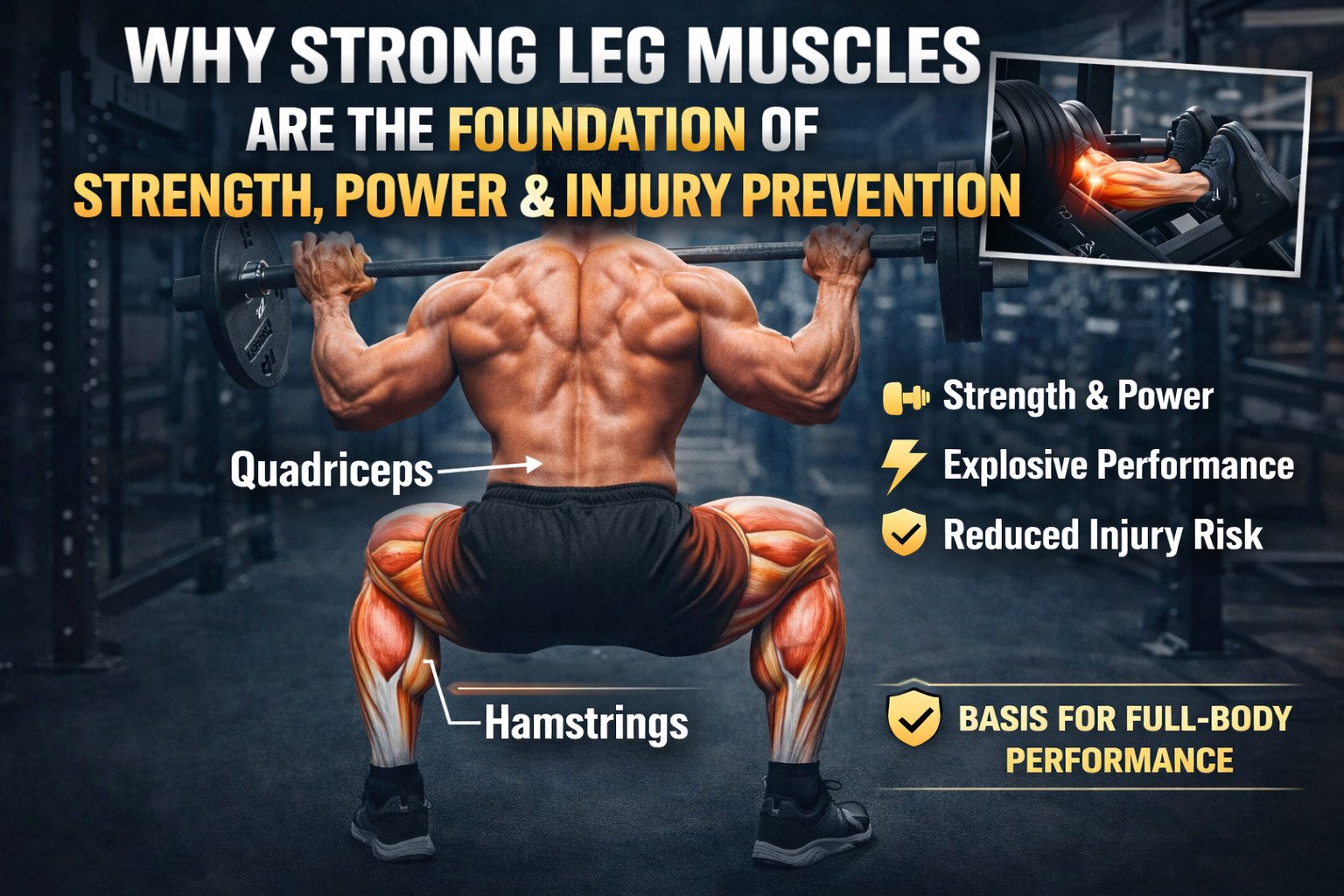
When people think about training legs, they often focus only on size — bigger quads, stronger glutes, or visible hamstrings. However, strong leg muscles are about far more than aesthetics. They drive athletic performance, support joint stability, improve metabolism, enhance mobility, and reduce injury risk.
According to the American Council on Exercise, lower-body strength plays a critical role in balance, power production, and overall functional movement. In today’s sedentary lifestyle, weak lower-body muscles contribute to knee pain, hip instability, poor posture, and even lower back discomfort.
Leg strength is not optional — it is foundational for full-body performance.
Understanding Types of Leg Muscles (Complete Breakdown)
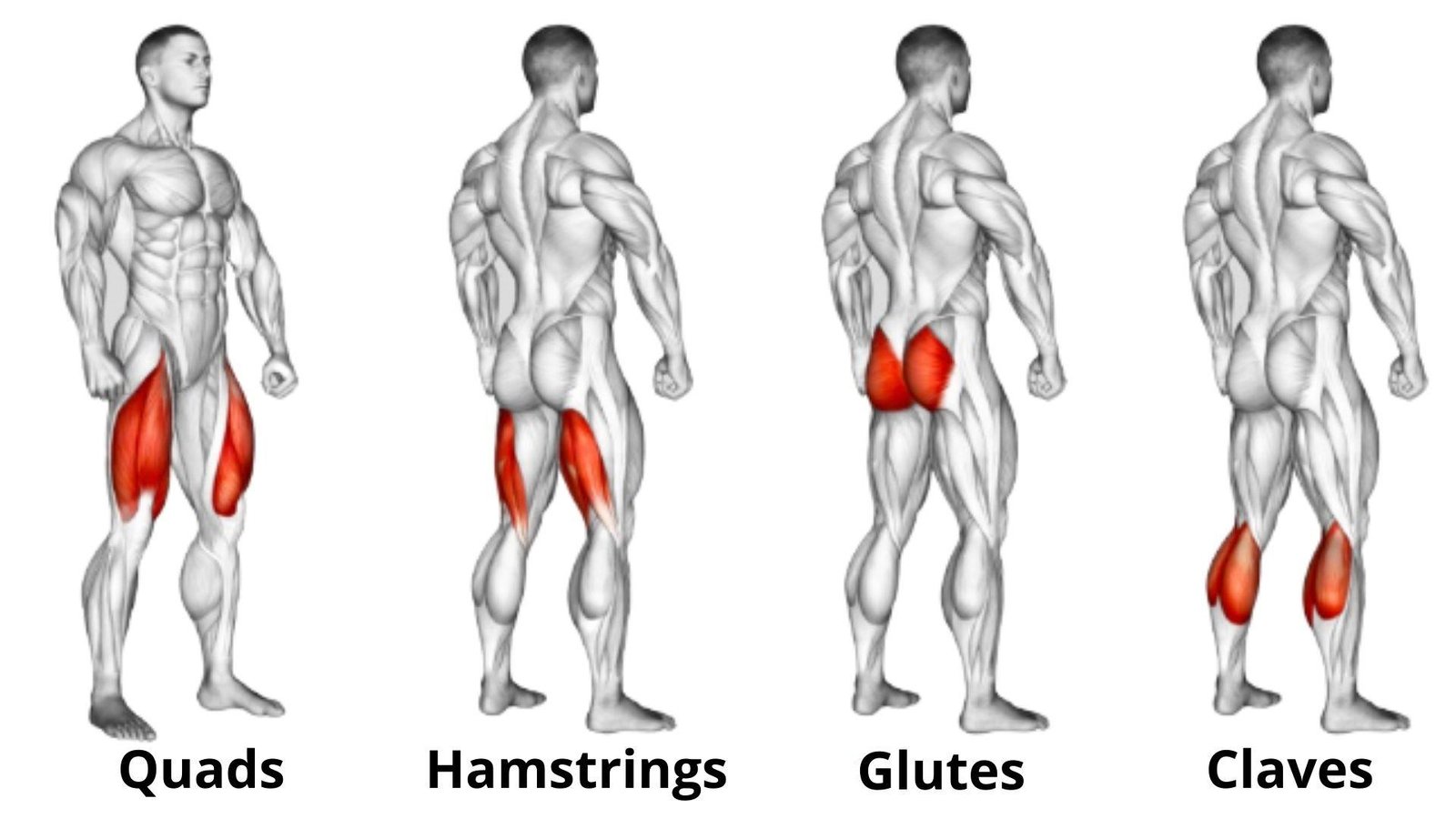
To design an effective leg workout, you must understand leg muscle anatomy and how each muscle contributes to movement, stability, and power. The lower body consists of major superficial (visible) muscles responsible for strength and size, along with stabilizing muscles that support balance and joint protection.
| Muscle Group | Location | Primary Function | Training Importance |
| Quadriceps (Rectus Femoris, Vastus Lateralis, Vastus Medialis, Vastus Intermedius) | Front thigh | Knee extension | Essential for squats, lunges, and leg press exercises |
| Hamstrings (Biceps Femoris, Semitendinosus, Semimembranosus) | Back thigh | Knee flexion & hip extension | Supports sprinting, deadlifts & injury prevention |
| Glute Muscles (Maximus, Medius, Minimus) | Hip region | Hip extension & stabilization | Power generation & posture control |
| Calves (Gastrocnemius, Soleus) | Lower leg | Ankle plantarflexion | Jumping, walking & ankle stability |
Strong hamstrings, combined with proper stretching, reduce the risk of knee injury. Targeted glute exercises improve hip power and alignment, while consistent calf exercises enhance lower-leg strength and explosiveness. Balanced training of all leg muscle types improves performance, stability, and long-term joint health.
Types of Leg Workouts (Beginner to Advanced)
Below is a structured breakdown of leg workouts based on level and focus.
Level | Focus | Exercises | Key Goal |
Beginner | Activation & Form | Bodyweight Squats, Glute Bridges, Step-Ups | Learn movement mechanics |
Intermediate | Strength Building | Back Squats, Romanian Deadlifts, Walking Lunges | Muscle growth & stability |
Advanced | Power & Hypertrophy | Heavy Squats, Bulgarian Split Squats, Leg Press | Maximum strength & muscle size |
For balanced development, combine compound and isolation movements.
Types of Leg Workouts (Beginner to Advanced)
Below is a structured breakdown of leg workouts based on level and focus.
Level | Focus | Exercises | Key Goal |
Beginner | Activation & Form | Bodyweight Squats, Glute Bridges, Step-Ups | Learn movement mechanics |
Intermediate | Strength Building | Back Squats, Romanian Deadlifts, Walking Lunges | Muscle growth & stability |
Advanced | Power & Hypertrophy | Heavy Squats, Bulgarian Split Squats, Leg Press | Maximum strength & muscle size |
For balanced development, combine compound and isolation movements.
Hamstring Exercises & Flexibility
Strong hamstrings improve sprinting power, knee stability, and injury prevention. Combining strengthening and flexibility ensures balanced lower-body development.
Hamstring Training & Stretching Table
Category | Exercise | Primary Focus | Benefit |
Strength | Romanian Deadlifts | Hip hinge & hamstring load | Builds posterior chain strength |
Strength | Lying Leg Curl | Knee flexion | Isolates hamstrings |
Strength | Nordic Curl | Eccentric control | Injury prevention |
Strength | Glute-Ham Raises | Hip extension | Advanced strength |
Strength | Single-Leg Deadlifts | Balance & stability | Corrects muscle imbalance |
Flexibility | Standing Toe Touch | Static stretch | Improves flexibility |
Flexibility | Seated Forward Fold | Deep hamstring stretch | Enhances mobility |
Flexibility | Resistance Band Stretch | Assisted stretch | Controlled muscle lengthening |
Balanced training improves performance and reduces strain on knees and hips.

How to Make Leg Muscles Strong
Building strong leg muscles requires a structured and disciplined approach. Train your legs at least twice per week, applying progressive overload by gradually increasing weight, repetitions, or intensity. Focus on compound movements such as squats, Romanian deadlifts, and leg presses, as these exercises engage multiple muscle groups and stimulate maximum strength development. Maintain adequate protein intake between 1.6–2.2 grams per kilogram of bodyweight to support muscle repair and growth. Aim for 7–9 hours of quality sleep per night and allow 48–72 hours of recovery between intense leg sessions. True strength is built through consistent training, proper nutrition, and recovery.
Benefits of Strong Leg Muscles
Strong leg muscles provide benefits far beyond appearance. They improve athletic performance by enhancing speed, power, and endurance. Well-developed legs support better posture and spinal alignment, helping reduce lower back strain. Strengthening major lower-body muscles lowers the risk of knee injuries and increases joint stability. Because the legs contain large muscle groups, training them boosts calorie expenditure and supports fat burning. Ultimately, strong legs contribute to greater total-body strength, improved mobility, and better balance in both daily activities and sports performance.
Conclusion
Avoiding these common leg training mistakes is essential for maximizing strength, muscle growth, and long-term joint health. Proper warm-ups, balanced muscle development, full range of motion, correct technique, and adequate recovery all play crucial roles in safe, practical training. By focusing on innovative programming rather than shortcuts, you can ensure consistent progress, reduce injury risk, and build stronger, more resilient leg muscles over time.

Swaraj Verma
Swaraj Verma is a certified health and fitness trainer with over 10 years of experience in the fitness and wellness industry and the founder of Fitswaraj.com, a health-focused platform dedicated to promoting sustainable, science-based lifestyles. He holds Bachelor’s and Master’s degrees in Nutrition and Health Sciences and specializes in exercise science, nutrition planning, body transformation, and lifestyle coaching. Over the years, he has successfully trained 50+ fitness models and individuals using personalized, evidence-based methods. Through Fitswaraj, Swaraj focuses on long-term wellness over short-term fitness trends by delivering reliable, expert-driven health content and offering a verified fitness professional listing that helps users connect with trusted trainers and wellness experts.