Shoulder Muscles Guide: Build Strength & Stability Effectively
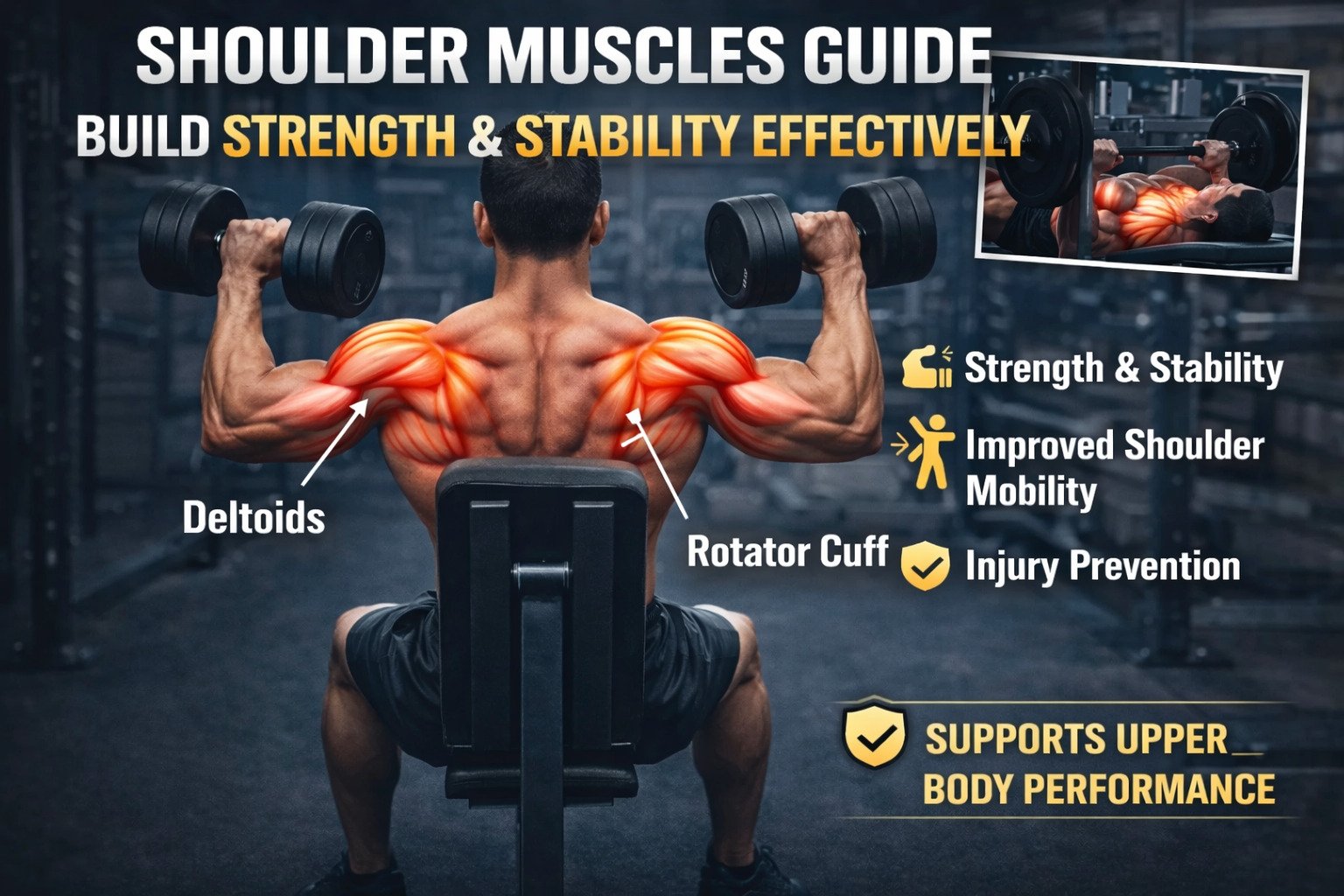
Developing strong shoulder muscles is essential for overall upper body strength, functional movement, and injury prevention. Well-trained shoulders not only improve your physical appearance but also enhance pressing power, overhead lifting capacity, and arm mobility. Effective shoulder development requires understanding the different regions of the shoulder complex and applying targeted exercises with proper technique. By focusing on the anterior, lateral, and posterior deltoids, along with stabilizing muscles, you can achieve balanced strength, improved posture, and better athletic performance. Consistency, controlled movements, and proper recovery are key to maximizing shoulder growth and stability.
Types of Shoulder Muscles: Understanding Shoulder Anatomy
The shoulder is a highly mobile joint supported by multiple muscle groups that work together to produce strength, stability, and controlled movement. Rather than functioning as a single muscle, the shoulder complex includes primary muscles and stabilizers that contribute to overhead pressing, rotation, and arm mobility.
Muscle | Location | Primary Function | Common Exercises |
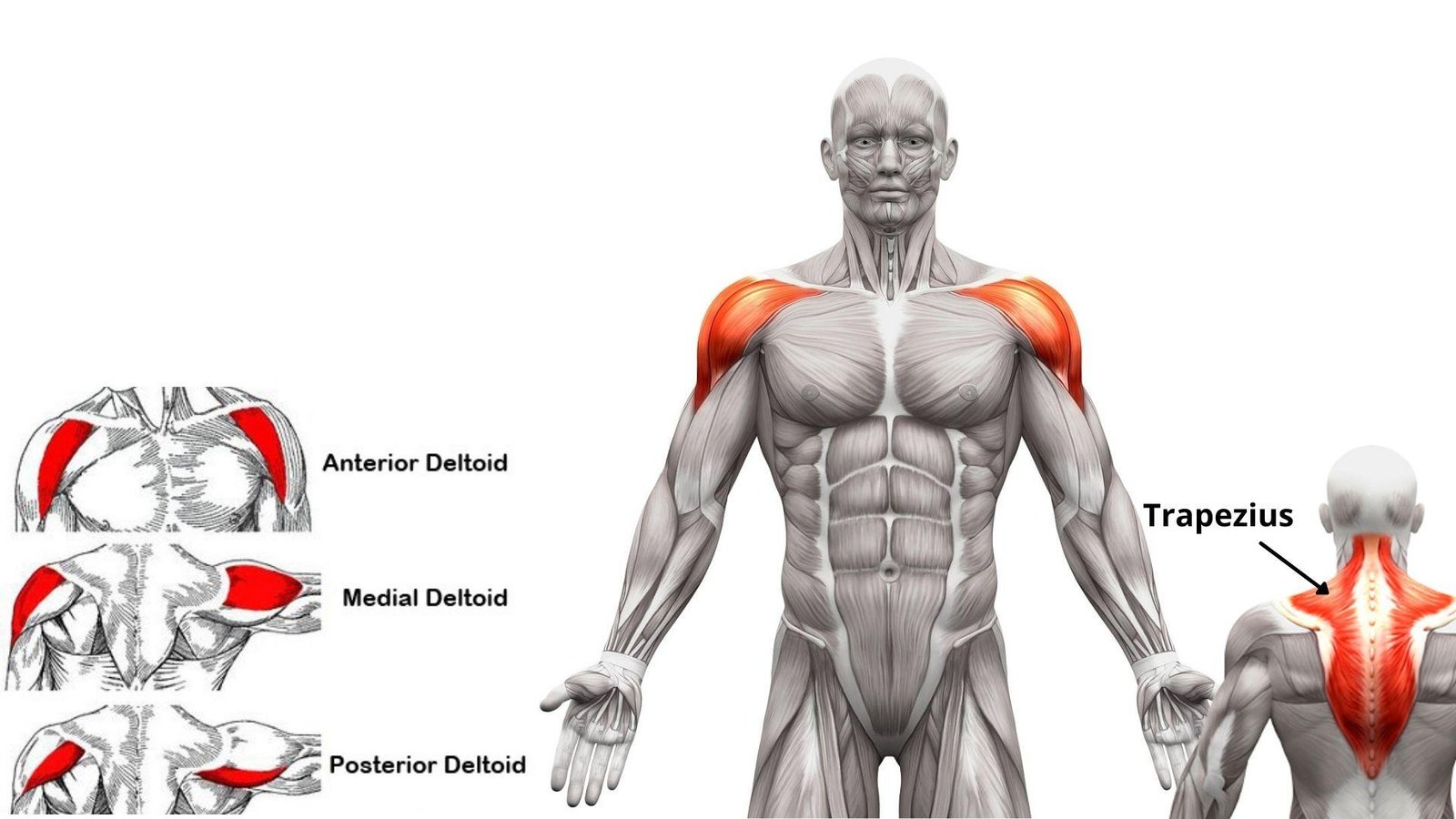
Deltoid (Anterior/Front) | Front of shoulder | Shoulder flexion, internal rotation, forward pressing | Front Raises, Overhead Press, Dumbbell Press, Push Press |
Deltoid (Lateral/Middle) | Side of shoulder | Shoulder abduction, width & lateral lift | Lateral Raises, Upright Rows, Arnold Press, Cable Lateral Raises |
Deltoid (Posterior/Rear) | Back of shoulder | Shoulder extension, horizontal abduction, posture | Rear Delt Fly, Face Pulls, Reverse Pec Deck, Bent-Over Lateral Raises |
Rotator Cuff Muscles | Deep shoulder (SITS muscles: Supraspinatus, Infraspinatus, Teres Minor, Subscapularis) | Stabilize shoulder joint, control rotation | External/Internal Rotation, Cable Rotations, Band Pull-Aparts |
Trapezius & Serratus Anterior | Upper back & side chest | Scapular elevation, retraction, protraction | Shrugs, Face Pulls, Push-Up Plus, Scapular Push-Ups |
Benefits of Shoulder Muscle Training
Training shoulder muscles goes far beyond appearance. Strong shoulders improve upper body functionality, protect joints, and enhance posture. Because the shoulder is involved in nearly all pushing, lifting, and throwing movements, strengthening it reduces injury risk and supports athletic performance. Key benefits of shoulder training include:
Top 5 Benefits:
- Increased Overhead Strength – Improves pressing power in exercises like overhead press, push press, and military press.
- Enhanced Athletic Performance – Supports throwing, swimming strokes, climbing, punching, and any overhead motion.
- Better Posture & Shoulder Stability – Strengthens muscles that stabilize the shoulder joint and prevent slouching.
- Balanced Shoulder Physique – Creates rounded, well-defined shoulders with proper width and proportion.
- Reduced Risk of Shoulder Injuries – Strengthening stabilizers reduces dislocations, impingements, and rotator cuff strains.
Structured Shoulder Workout Plan (Beginner to Advanced)
Target Area | Level | Exercises | Key Focus |
Anterior (Front Delts) | Beginner | Front Raises, Light Dumbbell Press, Incline Push-Ups | Activation & controlled flexion |
Intermediate | Overhead Barbell Press, Dumbbell Front Raise, Arnold Press | Hypertrophy & pressing strength | |
Advanced | Heavy Dumbbell/Military Press, Push Press, Plate Front Raises | Maximum overload & strength | |
Lateral (Side Delts) | Beginner | Lateral Raises (light), Upright Rows (light), Resistance Band Lateral Raises | Activation & mind-muscle connection |
Intermediate | Dumbbell Lateral Raise (full range), Cable Lateral Raise, Arnold Press | Muscle growth & width development | |
Advanced | Heavy Dumbbell Lateral Raises, Drop Set Cable Lateral Raise, Overhead Press (wide grip) | Maximum shoulder width & separation | |
Posterior (Rear Delts) | Beginner | Rear Delt Fly (light), Band Pull-Aparts, Face Pulls | Posture & activation |
Intermediate | Reverse Pec Deck, Bent-Over Lateral Raises, Face Pulls (pause) | Hypertrophy & scapular stability | |
Advanced | Heavy Rear Delt Fly, Cable Reverse Fly Drop Sets, Single-Arm Dumbbell Rear Raise | Maximum definition & strength | |
Rotator Cuff / Stabilizers | All Levels | External/Internal Rotation, Scaption Raises, Band Pull-Aparts, Scapular Push-Ups | Joint stabilization & injury prevention |

Frequent Mistakes in Shoulder Training
Many lifters struggle with shoulder development due to common errors, which can hinder gains and increase injury risk:
- Lifting too heavy too soon – Reduces muscle activation and stresses the joint.
- Neglecting rear delts and rotator cuff – Leads to imbalances, poor posture, and shoulder pain.
- Partial range of motion – Limits full shoulder development and functional strength.
- Poor scapular control – Affects performance in presses and fly movements.
- Overtraining – Shoulders require recovery; too frequent heavy sessions slow progress and increase injury risk.
How to Recover and Fuel Your Shoulder Workouts
Proper recovery and nutrition are critical for shoulder strength and growth:
- Consume adequate daily protein to support muscle repair.
- Train shoulders 1–2 times per week with at least 48–72 hours of rest between sessions.
- Prioritize 7–9 hours of quality sleep for optimal recovery.
- Apply progressive overload gradually, increasing weights, reps, or intensity safely.
- Focus on mobility and stretching to prevent tightness and maintain joint health.
Conclusion
Strong shoulders are essential for upper body strength, functional performance, and aesthetic balance. Beyond appearance, they contribute to better posture, increased pressing power, and reduced injury risk. By understanding shoulder anatomy and following a structured, progressive training plan that targets anterior, lateral, and posterior delts, along with stabilizing muscles, you can achieve well-rounded strength and definition. Consistency, proper form, and recovery are key to maximizing results.

Swaraj Verma
Swaraj Verma is a certified health and fitness trainer with over 10 years of experience in the fitness and wellness industry and the founder of Fitswaraj.com, a health-focused platform dedicated to promoting sustainable, science-based lifestyles. He holds Bachelor’s and Master’s degrees in Nutrition and Health Sciences and specializes in exercise science, nutrition planning, body transformation, and lifestyle coaching. Over the years, he has successfully trained 50+ fitness models and individuals using personalized, evidence-based methods. Through Fitswaraj, Swaraj focuses on long-term wellness over short-term fitness trends by delivering reliable, expert-driven health content and offering a verified fitness professional listing that helps users connect with trusted trainers and wellness experts.