Triceps Muscle Guide: Build Strength & Size Effectively
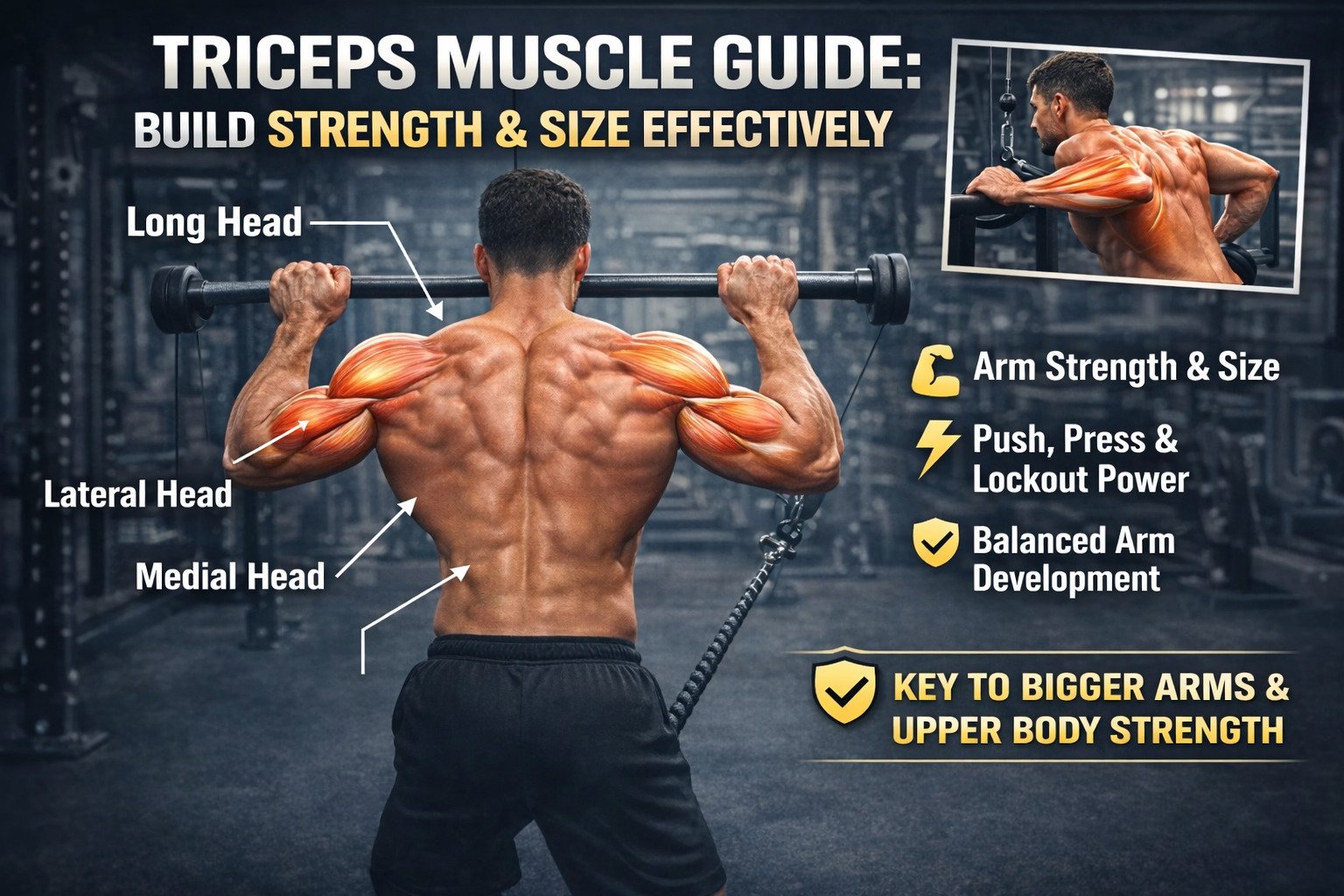
Strong triceps are essential for complete upper body development, enhancing arm size, pressing strength, and overall arm stability. The triceps are the primary muscles responsible for elbow extension, which powers pushing movements like bench presses, push-ups, and dips. Developing the triceps not only improves aesthetics but also supports shoulder and elbow stability, enhances pressing performance, and prevents injuries. Effective triceps training involves targeting all three heads of the muscle — long, lateral, and medial — using proper technique, progressive overload, and structured exercises. Consistency and recovery are crucial for maximizing strength and size.
Types of Triceps Muscles: Understanding Triceps Anatomy
The triceps brachii is located at the back of the upper arm and is composed of three distinct heads, each contributing to arm extension and overall muscle shape. Properly targeting all three heads ensures balanced development, strength, and arm aesthetics.
Muscle | Location | Primary Function | Common Exercises |
Long Head | Runs along the back of the arm, connecting scapula to elbow | Elbow extension, shoulder stabilization, overhead push | Overhead Dumbbell Extension, Skull Crushers, Cable Overhead Extension |
Lateral Head | Outer portion of the triceps | Elbow extension, adds arm width | Triceps Pushdowns, Close-Grip Bench Press, Diamond Push-Ups |
Medial Head | Inner portion of the triceps, deep under long and lateral heads | Elbow extension, stabilizes elbow | Reverse Grip Pushdowns, Rope Pushdowns, Close-Grip Bench Press |
Benefits of Triceps Muscle Exercises
Training the triceps offers far more than just bigger arms, as well-developed triceps significantly enhance pressing strength for movements like the bench press, overhead press, dips, and push-ups while also improving overall arm size and definition by developing the back of the arms for a fuller, more balanced appearance. Strong triceps contribute to better elbow and shoulder stability by reinforcing key stabilizing muscles, which leads to safer and more efficient pressing mechanics. They also play a vital role in athletic performance by supporting powerful throwing, pushing, and striking actions, and by balancing the strength of the biceps and forearms, well-trained triceps help reduce the risk of injury to the elbow and shoulder joints in both training and daily activities.
Structured Triceps Workout Plan (Beginner to Advanced)
Target Area | Level | Exercises | Key Focus |
Long Head | Beginner | Overhead Dumbbell Extension (light), Bench Dips (assisted), One-Arm Cable Extension | Activation & mind-muscle connection |
Intermediate | Seated Overhead Dumbbell Press, Skull Crushers, Cable Overhead Extension | Hypertrophy & shoulder-stabilized extension | |
Advanced | Heavy Overhead Dumbbell Press, Incline Skull Crushers, Rope Overhead Extension Drop Sets | Maximum overload & growth | |
Lateral Head | Beginner | Triceps Pushdowns (light), Close-Grip Push-Ups, Diamond Push-Ups (assisted) | Activation & control |
Intermediate | Barbell Close-Grip Bench Press, Rope Pushdowns, Machine Triceps Press | Muscle thickness & lateral definition | |
Advanced | Weighted Dips, Heavy Rope Pushdowns, Plate-Loaded Close-Grip Press | Maximum outer triceps development | |
Medial Head | Beginner | Reverse Grip Pushdowns (light), Seated Rope Pushdowns, Dumbbell Kickbacks | Activation & stabilization |
Intermediate | Cable Rope Pushdowns, Reverse Grip Bench Press, One-Arm Kickbacks | Hypertrophy & tension focus | |
Advanced | Heavy Rope Pushdowns, Drop Set Kickbacks, Isometric Holds | Peak contraction & inner arm definition |

Frequent Mistakes in Triceps Training
Frequent mistakes in triceps training can significantly limit muscle growth and increase the risk of injury. Overloading weights without proper control shifts tension away from the triceps and places excessive stress on the elbows, while neglecting the long head of the triceps results in incomplete arm development and weaker overhead pressing strength. Performing exercises with a partial range of motion prevents full muscle stretch and contraction, reducing overall effectiveness. Additionally, using momentum by swinging the weights decreases muscle activation and raises injury risk, and overtraining the triceps with heavy, frequent sessions interferes with recovery, ultimately slowing progress rather than improving it.
How to Recover and Fuel Your Triceps Workouts
Proper recovery and nutrition play a crucial role in maximizing triceps growth and strength. Ensuring adequate protein intake supports muscle repair and development, while training the triceps only one to two times per week with 48–72 hours of rest between sessions allows the muscles to fully recover. Getting seven to nine hours of quality sleep further enhances muscle recovery and performance. Applying progressive overload in a safe, gradual manner helps stimulate growth without overloading the joints, and incorporating mobility and stretching exercises helps maintain elbow health and reduces the risk of injury.

Swaraj Verma
Swaraj Verma is a certified health and fitness trainer with over 10 years of experience in the fitness and wellness industry and the founder of Fitswaraj.com, a health-focused platform dedicated to promoting sustainable, science-based lifestyles. He holds Bachelor’s and Master’s degrees in Nutrition and Health Sciences and specializes in exercise science, nutrition planning, body transformation, and lifestyle coaching. Over the years, he has successfully trained 50+ fitness models and individuals using personalized, evidence-based methods. Through Fitswaraj, Swaraj focuses on long-term wellness over short-term fitness trends by delivering reliable, expert-driven health content and offering a verified fitness professional listing that helps users connect with trusted trainers and wellness experts.